
The Deposition
A Roman Breviary Image

I have another image scanned from my 1894 Roman Breviary to share with you.
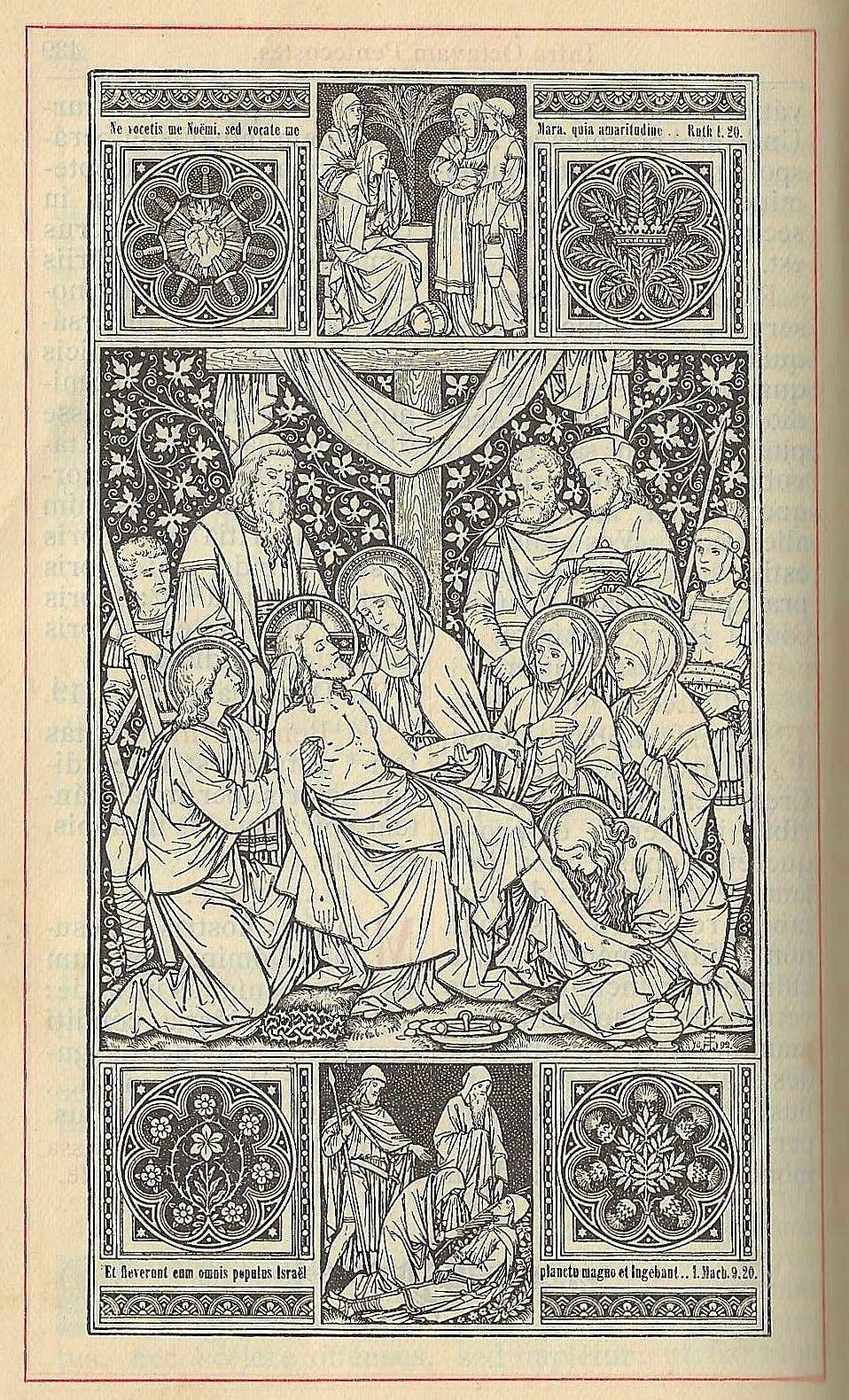
Central Panel: The Deposition
The body of Jesus has been lowered from the cross, which stands behind the group draped with a shroud.
The Mourners: The Virgin Mary cradles Christ’s head, while Mary Magdalene (identified by her long, flowing hair and pot of nard) kneels to kiss his feet. St. John supports his torso. The other two Marys kneel on the right, while in the background stand Joseph of Arimathea and Nicodemus, the men who provided the tomb and burial spices.
The Instruments of the Passion: On the ground, you can see the Crown of Thorns and a basin containing the nails, representing the physical reality of his suffering. On the left a soldier holds the ladder used to bring Jesus down from the cross. On the right another soldier holds the spear used to pierce his side.
Background: The vine motif continues from the crucifixion image, symbolizing the “True Vine,” but here the atmosphere is one of stillness and grief rather than active sacrifice.
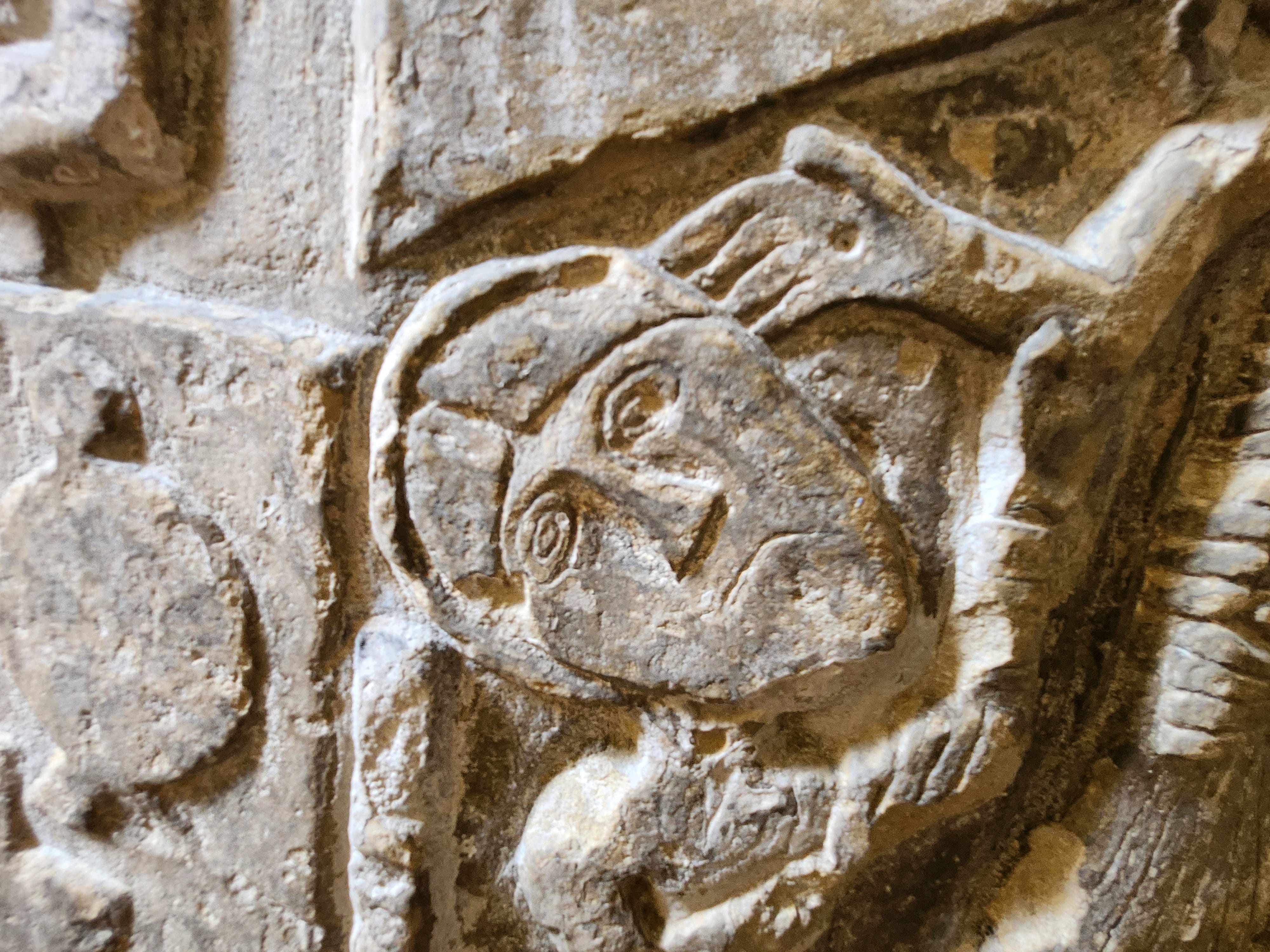
The Deposition has been a favourite themes for artists down the centuries. Yesterday I showed you a baptismal font featuring the Last Supper, and on that same 11th/12th century font is a depiction of the Deposition.
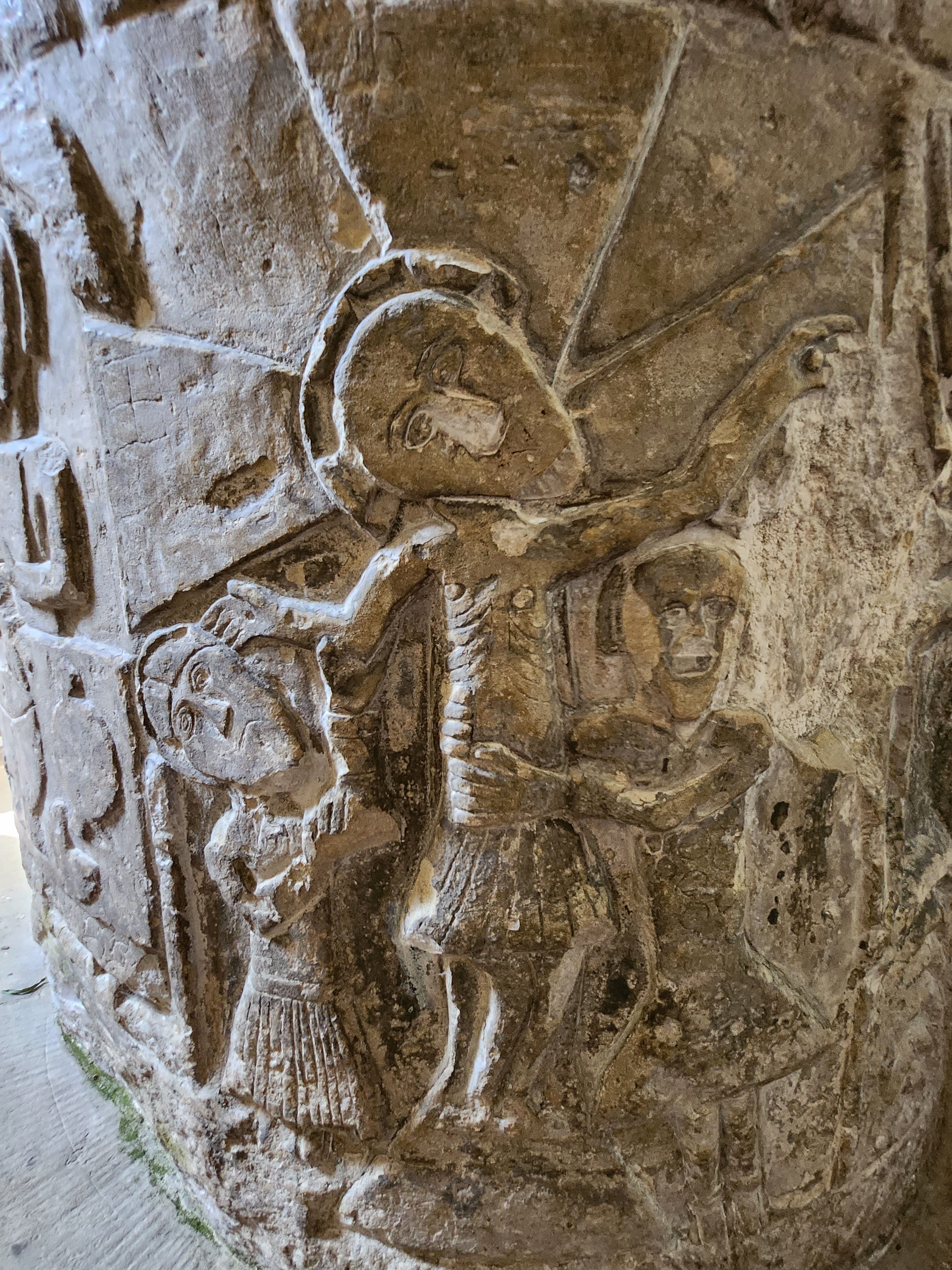
It’s not superb art, but from the heart which is why I find it so touching.
Top Register: Naomi and the Bitterness of Grief
Returning to the print, at the top the Latin text reads: “Ne vocetis me Noëmi, sed vocate me Mara, quia amaritudine...” (Ruth 1:20).
Naomi returns to Bethlehem after the death of her husband and sons. She is surrounded by mourning women.
Naomi says, “Call me not Naomi (pleasant), but call me Mara (bitter), for the Almighty hath dealt very bitterly with me.” In Christian tradition, Mary is the “New Naomi,” whose joy has been turned to bitterness through the death of her son.
The left medallion shows a heart pierced by seven swords, a traditional symbol for the “Seven Sorrows of Mary.” The right medallion shows a crown of flowers and a crown of thorns, contrasting Mary’s heavenly glory with her earthly pain.
Bottom Register: The Mourning for Judas Maccabeus
The Latin text reads: “Et fleverunt eum omnis populus Israël planctu magno et lugebant...” (1 Mach. 9:20).
The body of the Jewish hero Judas Maccabeus is mourned by his people after he fell in battle defending Israel.
Judas Maccabeus was seen as a “Saviour of Israel” in a political and military sense. His death caused “great lamentation” throughout the land. He serves as a “type” for Christ - the true Savior whose death causes universal mourning among his followers.
Just as Judas died to liberate his people from earthly tyranny, the artist uses this to foreshadow Christ dying to liberate humanity from spiritual tyranny.
The bottom left shows a stylised Lily among Thorns. This refers to a verse from the Song of Solomon (“As the lily among thorns, so is my love among the daughters”), often used to represent Mary’s purity preserved in a world of sin and suffering.
On the right, a pomegranate tree. In Christian art, the pomegranate is a symbol of the and hope of eternal life, because the bursting fruit reveals a multitude of seeds, signifying the “fruits” of Christ’s sacrifice.
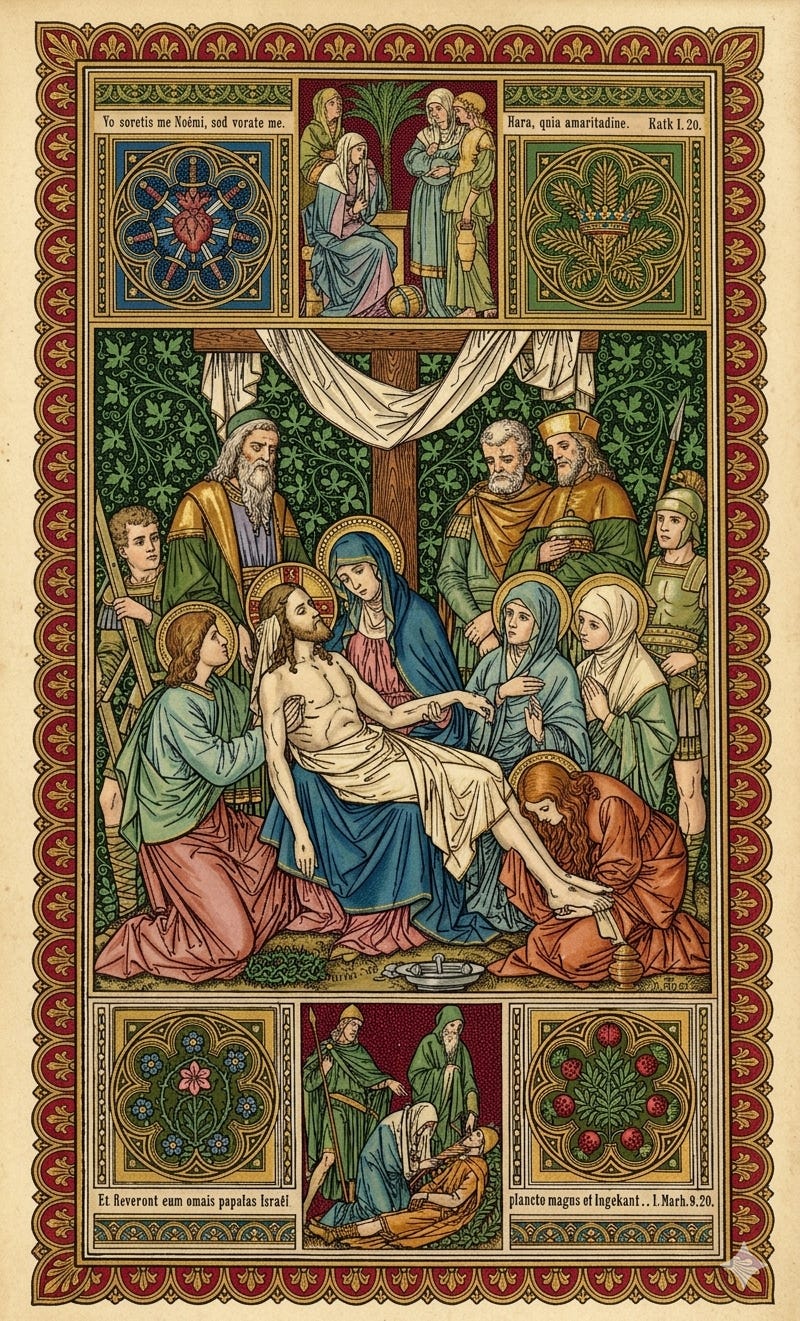
Finally, with the help of AI, here is a colourised version. Do ne aware that sometimes AI changes certain details!
If you don’t want to sign up to a paid subscription, do consider buying me a coffee by leaving a contribution in my tip jar!
Have you seen my publication - my translation of Shepherd’s Prayer by St Aelred of Rievaulx? Available now via Amazon around the world, the isbn is: 979-8344184814.

My translations of ancient Latin hymns are available free to paid subscribers, but if you would like to purchase a PDF version then please visit my shop.
Thanks for reading Incola ego sum in terra! This post is public so feel free to share it.
Thank you so much for sharing these! ❤️