
Pentecost
A Roman Breviary Image
I have another image scanned from my 1894 Roman Breviary to share with you.
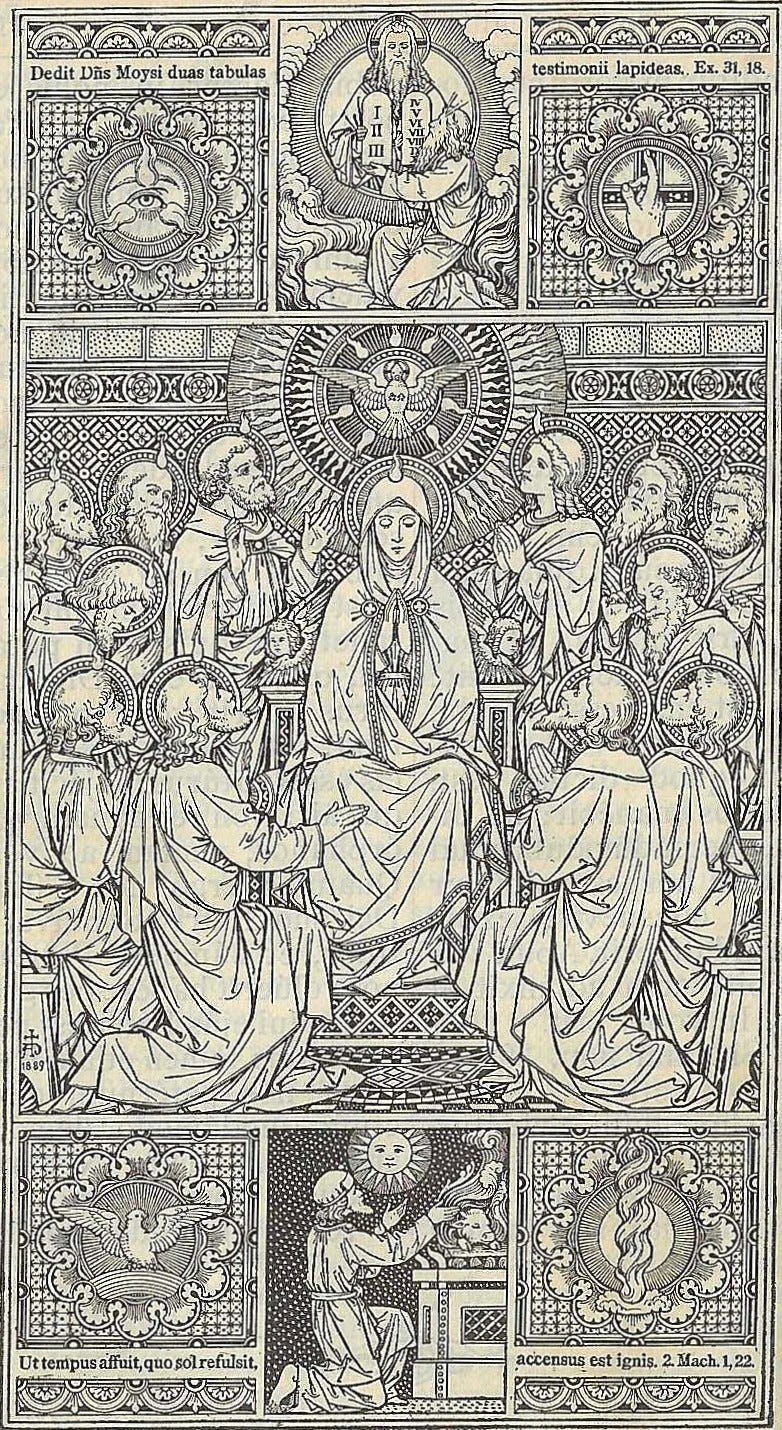
Central Panel: Pentecost (The Descent of the Holy Spirit)
This is the focal point of the artwork, depicting the event from the New Testament (Acts 2) where the Holy Spirit descends upon the followers of Jesus. Mary is in the centre, with the Apostles around. The Holy Spirit descends on each one in tongues of fire, and is illustrated in the form of a dove above Mary’s head.
The Top Panel: The Giving of the Law (Sinai)
This panel establishes the Old Testament parallel to Pentecost. In Jewish tradition, Shavuot (Pentecost) celebrates the giving of the Torah at Mount Sinai.
The Central Scene: God the Father, surrounded by a heavenly cloud and rays of light, hands the two stone tablets of the Ten Commandments to Moses, who kneels in reverence.
The Latin Inscription: Split across the top left and right, it reads: Dedit Dñs Moysi duas tabulas testimonii lapideas. Ex. 31, 18. “The Lord gave to Moses two tablets of the testimony, tablets of stone. Exodus 31:18.”
Side Medallions: On the left is the All-Seeing Eye inside a triangle (symbolizing the Trinity), and on the right is a Blessing Hand emerging from the heavens, both framed by ornate geometric and floral borders. The All-Seeing Eye (or Eye of Providence) emerged during the Renaissance as an emblem of God's benevolent watchfulness. The triangle represents the Holy Trinity, while the rays signify divine radiance. It was later adopted by the Freemasons.
Bottom Panel: The Miraculous Fire
The bottom panel provides a secondary Old Testament/Apocryphal parallel involving holy, miraculous fire.
The Central Scene: A man (likely Nehemiah or a priest) kneels before an altar where a sacrifice is being consumed by a sudden, miraculous fire, overseen by a sun in the sky.
The Latin Inscription: Ut tempus affuit, quo sol refulsit, accensus est ignis. 2. Mach. 1, 22. “As soon as the sun shone down... a great fire was kindled. 2 Maccabees 1:22. This passage refers to the rebuilding of the altar after the Babylonian exile, where water poured over the sacrifice miraculously burst into flame when the sun broke through the clouds. It serves as a typological symbol for the sudden, purifying fire of the Holy Spirit.
Side Medallions: The left features a Dove (the Holy Spirit) hovering over waters (reminscent of the Creation), and the right features Intertwined Flames/Smoke rising upward.
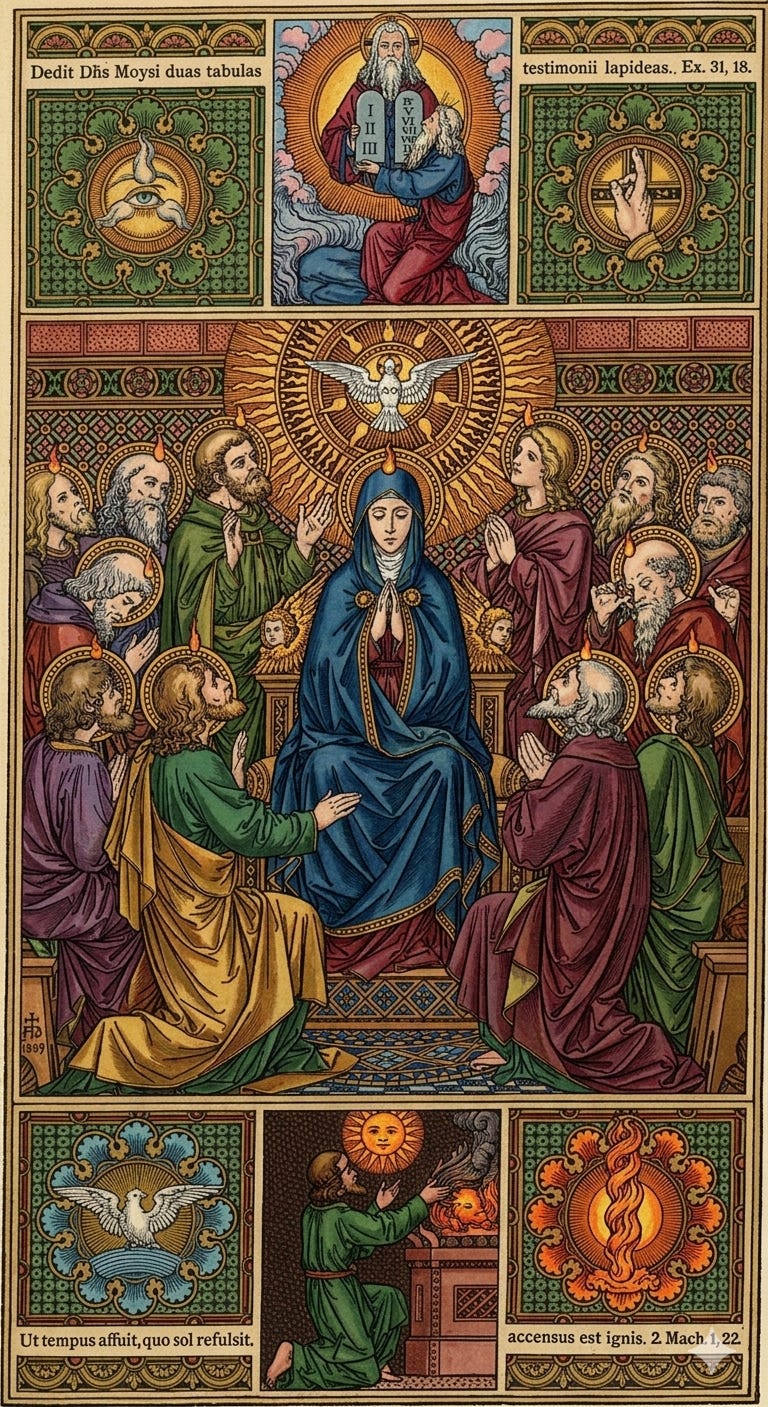
Finally, with the help of AI, here is a colourised version. As always, it does sometimes mess up a bit so beware! But its nice to get a colour impression of the picture.
If you don’t want to sign up to a paid subscription, do consider buying me a coffee by leaving a contribution in my tip jar!
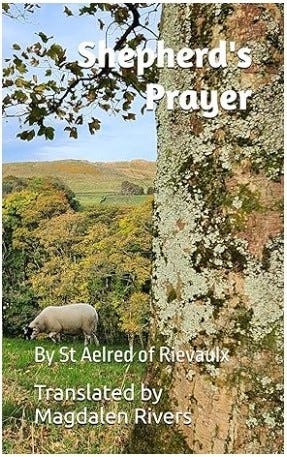
Have you seen my publication - my translation of Shepherd’s Prayer by St Aelred of Rievaulx? Available now via Amazon around the world, the isbn is: 979-8344184814.
My translations of ancient Latin hymns are available free to paid subscribers, but if you would like to purchase a PDF version then please visit my shop.
Thanks for reading Incola ego sum in terra! This post is public so feel free to share it.